The due diligence bottleneck
Every serious deal goes through the same crunch:
- Hundreds or thousands of documents in the data room.
- Multiple functional workstreams - commercial, financial, legal, tax, IT, HR, ESG.
- A fixed signing timeline that never quite matches the amount of work to be done.
Historically, the answer has been to throw people at the problem - associates, external advisors, and subject matter experts working long hours to read, extract, and synthesize.
That approach is increasingly strained:
- Deal timelines are not getting longer.
- Documentation is not getting simpler.
- Stakeholders expect more depth on topics like cybersecurity, data privacy, AI usage, and ESG.
Automation is not a nice-to-have. It is the only way to keep depth while staying on calendar.
Where AI and automation fit in diligence
AI and automation are already being used by advisors and PE firms to:
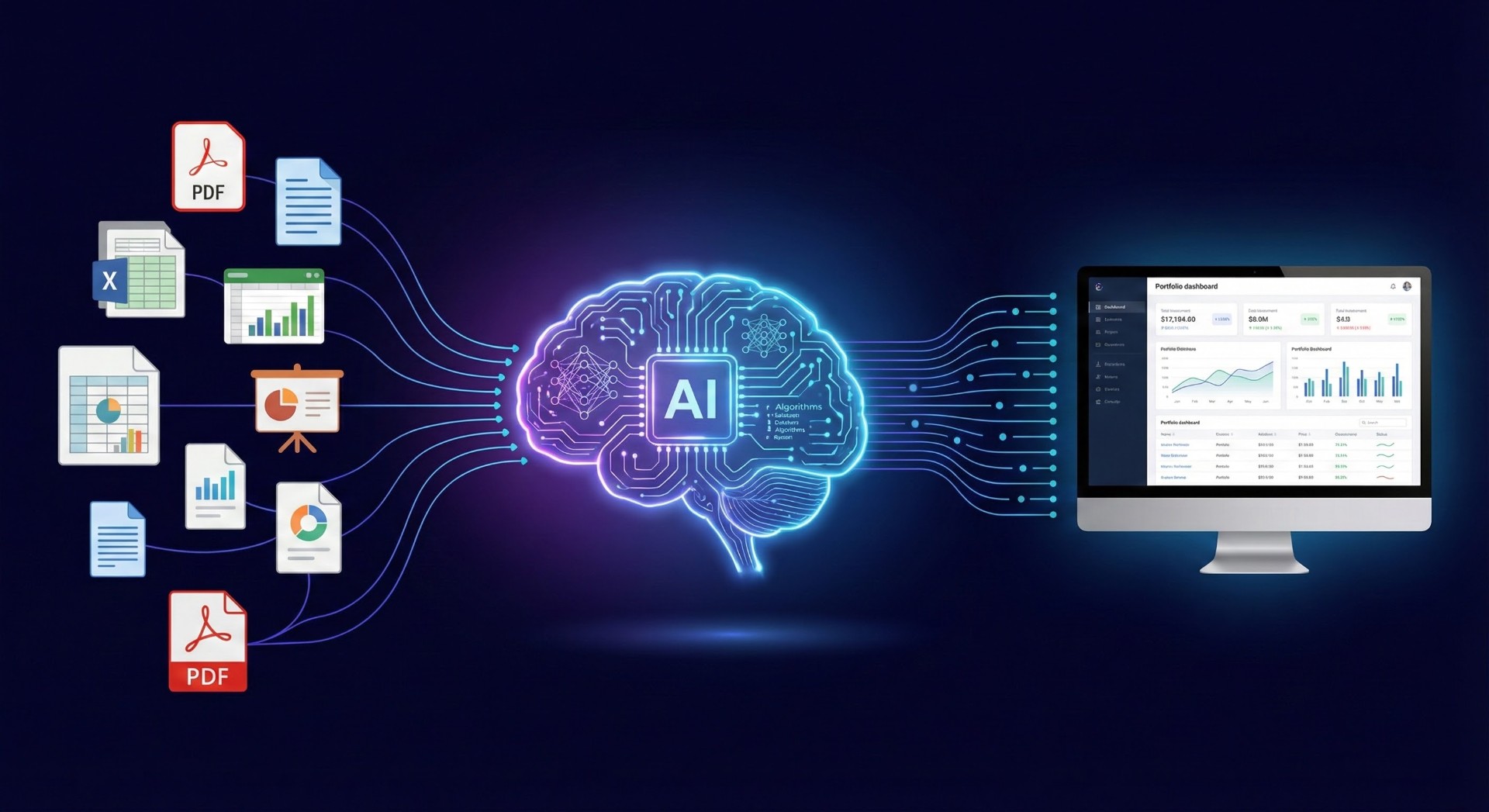
- Ingest and classify large volumes of documents from data rooms.
- Extract key terms and metrics from contracts and financial statements.
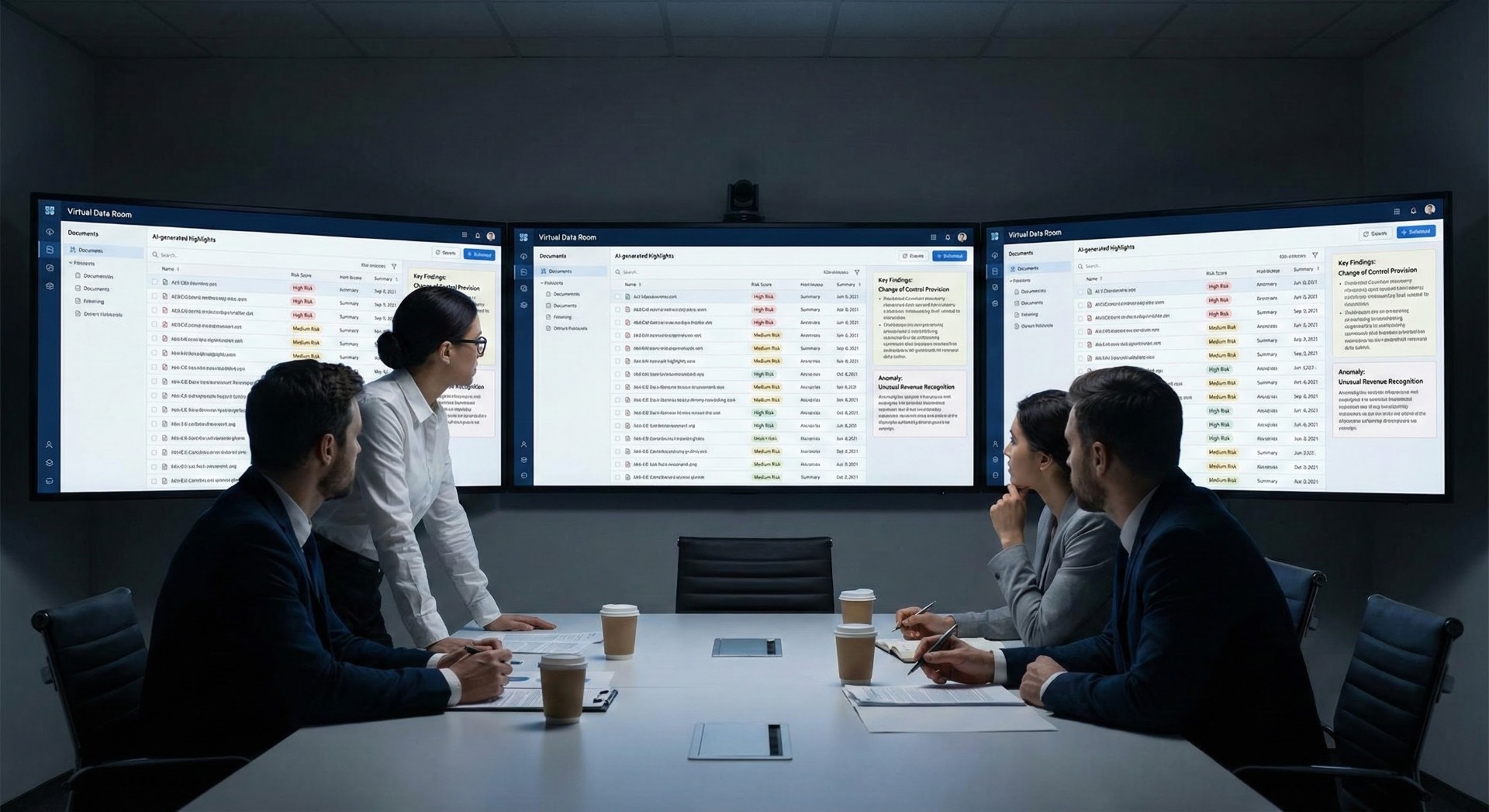
- Highlight anomalies and potential red flags for human review.
- Accelerate the drafting of diligence reports by pre-populating sections with structured findings.
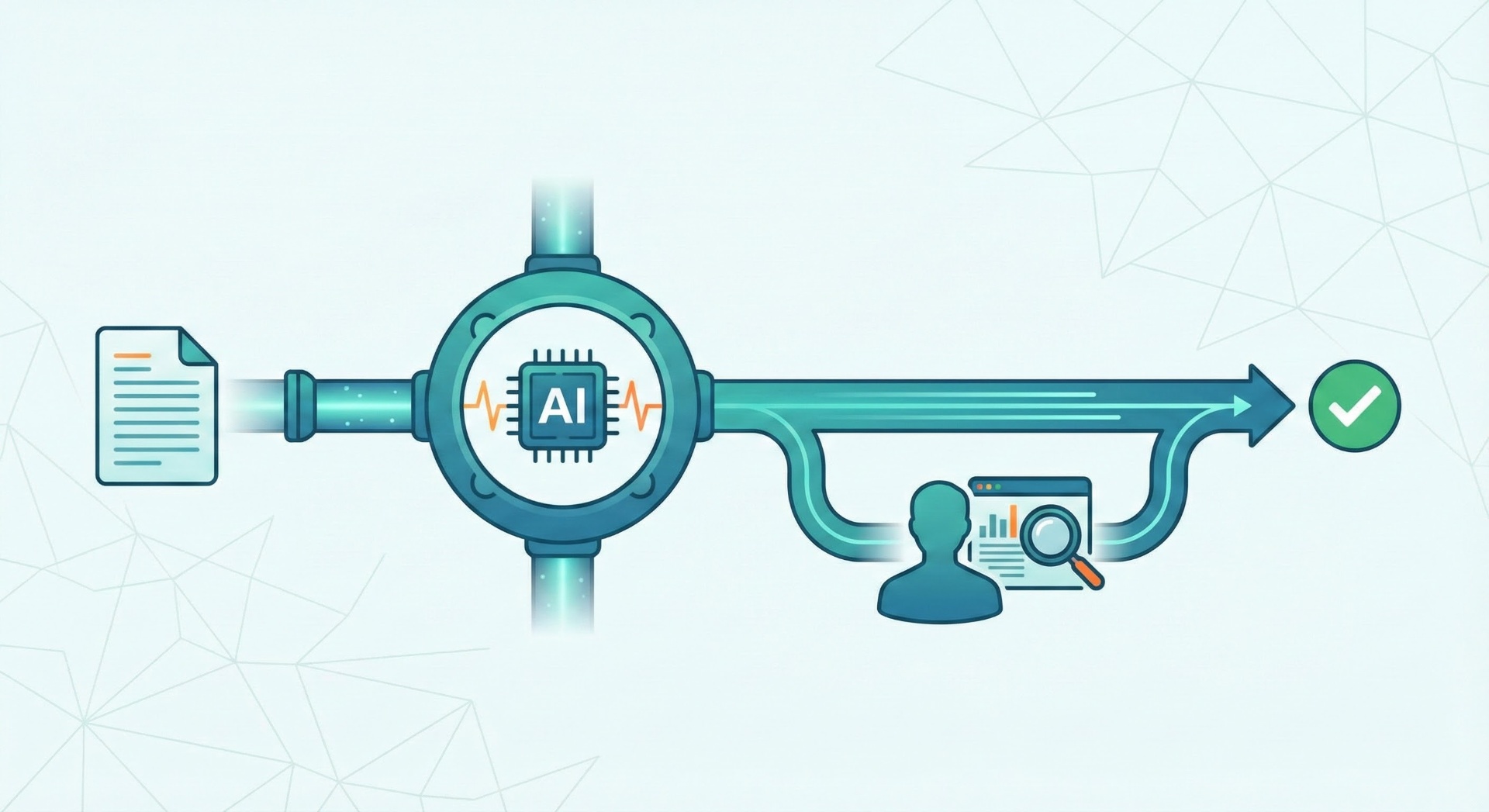
The critical point is that AI is a force multiplier for experienced teams, not a replacement for judgment.
The right mental model: triage, not autopilot
Think of AI-enabled diligence as a triage system:
- Machines handle volume and pattern recognition: finding, grouping, and summarizing.
- Humans handle ambiguity, context, and decision making.
If you start from the idea that "AI will do diligence for us," you will either deploy it in a way that is unsafe or abandon it after the first bad experience. If you start from the idea that "AI will help us see the important issues faster," you can design something that actually works.
A pragmatic blueprint for AI-enabled diligence
A workable architecture for automating parts of diligence has six stages.
1. Ingest and normalize the data room
- Connect the VDR or file source.
- Mirror the folder structure, but also tag documents by functional workstream.
- Create a basic index of all documents with metadata: type, date, counterparty, and size.
Automation helps by:
- Automatically recognizing common document types (financial statements, customer contracts, policies, HR rosters, etc.).
- Flagging missing or duplicated files.
2. Classify by document type and workstream
Use AI models to classify documents into categories such as:
- Customer, supplier, and partner contracts.
- Employment agreements and HR policies.
- Financial statements and management reports.
- IT architecture diagrams and security reports.
- Compliance and regulatory documents.
This classification is foundational. If you cannot reliably group documents by topic, you cannot scale the rest.
3. Extract key fields and metrics
For each document type, define a clear schema:
- For customer contracts: pricing model, term, renewal and termination rights, SLAs, liability caps, notice periods.
- For employment agreements: role, compensation, non-compete and non-solicit provisions, change-of-control terms.
- For financials: revenue, margin, cash, debt, key KPIs, covenants.
AI models can then:
- Pull those fields into a structured data set.
- Capture context around unusual terms or missing information.
Human reviewers still need to spot-check and validate, but they are now reviewing concentrated information instead of scanning every page.
4. Run red-flag and pattern analysis
With structured data in hand, you can implement:
- Threshold checks (for example, unusually high concentration in a single customer, odd revenue recognition patterns, aggressive SLAs).
- Consistency checks across contracts (for example, different liability caps for similar counterparties without a clear reason).
- Trend analysis (for example, margin trends, churn patterns, covenant headroom).
AI helps by highlighting where the portfolio of documents deviates from norms, not by "deciding" whether that deviation is acceptable.
5. Embed AI into the drafting process
Once facts and red flags are structured:
- Use AI to draft initial sections of diligence reports that describe factual findings: what the data shows, what the contracts say, how metrics have evolved.
- Keep judgment sections - "so what" analysis, deal recommendations, mitigation strategies - firmly in human hands.
This can significantly reduce the time between analysis and a usable deliverable, especially when the same team is working across multiple deals.
6. Feed insights back into your playbooks
Over time, you should:
- Track which issues discovered in diligence actually matter post-close.
- Update your schemas and red-flag rules accordingly.
- Build sector-specific or thesis-specific playbooks for what you always want to check.
AI is most valuable when it is aligned with learned patterns in your own investing, not just generic templates.
Governance and risk: what to watch out for
As with any AI use in a regulated and high-stakes environment, a few disciplines are non-negotiable:
- Data security
Confidential documents must be handled in environments that meet your and your counterparties' security standards.
- Explainability
You should be able to explain how your tools reached their conclusions and what data they used.
- Human accountability
A named person should own each workstream's conclusions. AI can support their work, but it should not dilute accountability.
- Repeatability
For a given type of deal, you should be able to follow the same process again and get comparable outputs.
Without these, you are trading one kind of risk for another.
Where to start in your next deal
You do not need to automate every aspect of diligence on day one. For your next deal:
- Choose one or two workstreams where document volume is high and structure is relatively consistent - for example, customer contracts and basic financials.
- Define clear schemas for what you want extracted and how you will use it.
- Pilot AI-assisted ingestion, extraction, and red-flagging with tight human oversight.
- Measure impact in days saved, depth of issues surfaced, and quality of final memos.
If the pilot works, expand coverage. If it does not, adjust the process and schema rather than abandoning the idea.
The firms that win on diligence in the coming years will be the ones that combine sharp judgment with systems that let them see more, sooner, with less noise. Automation and AI, used carefully, are how you get there.
If you want to see how GoodStream supports AI-enabled diligence workflows, request a demo and we will walk through examples tailored to your strategy.