The hidden cost of manual data collection
Most private markets firms claim to be "data driven." Yet, few can demonstrate a clean, repeatable process for getting portfolio data out of PDFs and into a system they trust.
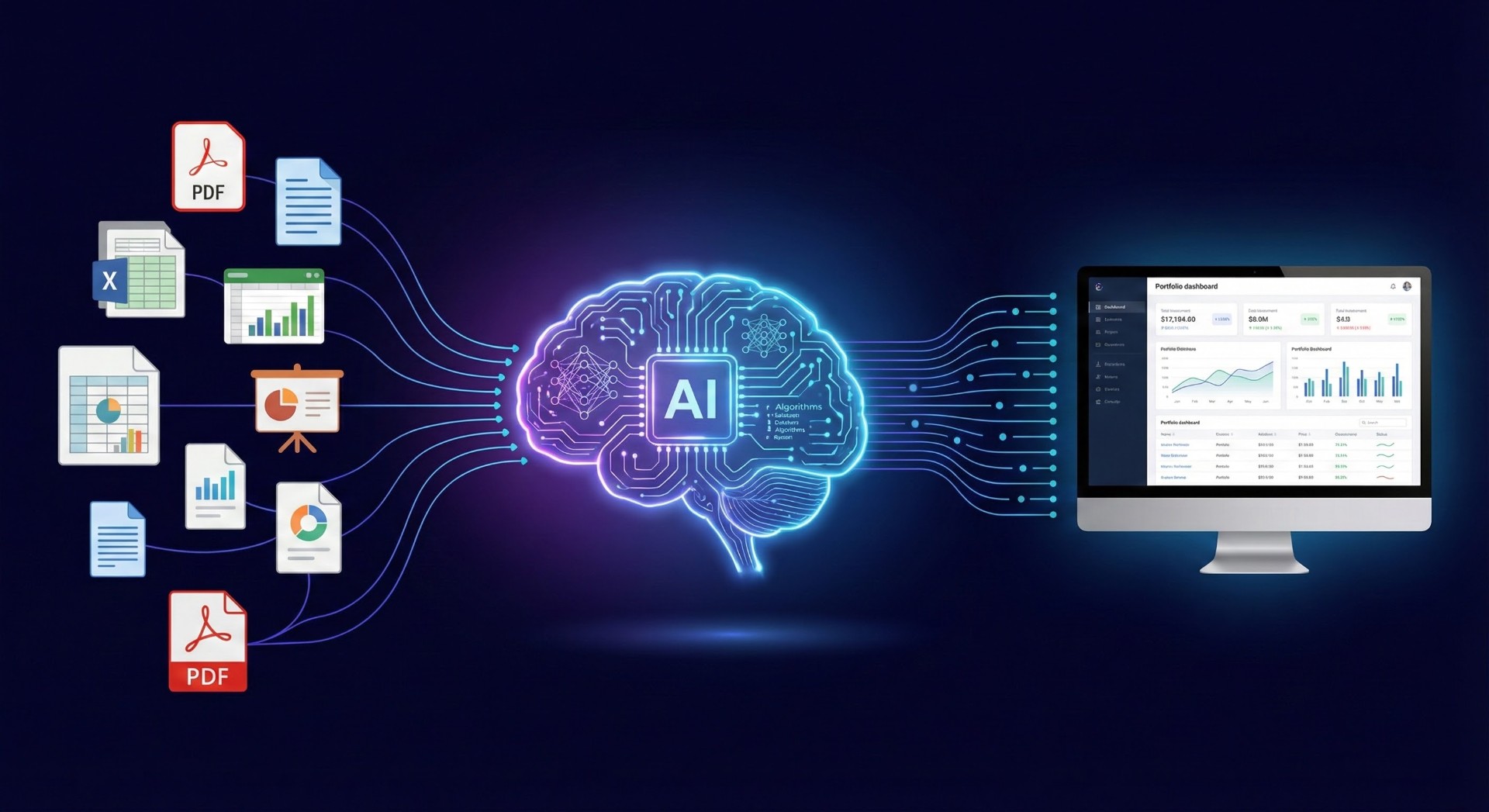
In practice, portfolio data still lives in:
- Quarterly financial packages trapped in email threads and shared drives
- Board decks with key metrics embedded in charts and images
- Ad hoc KPI files exported from whatever ERP the portfolio company uses this quarter
- Legal documents that define economics and governance but never make it into a structured database
The result is a familiar, painful pattern:
- Analysts and controllers spend weeks every quarter chasing files and re-keying numbers.
- Investment teams do not trust the central system, so they maintain their own Excel "shadow models."
- LP reporting and valuations sit downstream of a messy, brittle data process.
This is not just wasted time. It is a structural drag on the quality and speed of every decision that depends on portfolio data.
Why legacy tools struggled with private markets
Traditional portfolio management tools assumed that clean, structured data would arrive through an API or a standard import template. Private markets do not work that way.
- Every company formats financials differently.
- KPIs evolve as business models pivot.
- Crucial terms-liquidation preferences, covenants, consent rights-are buried in dense legal prose, not tables.
Legacy OCR (Optical Character Recognition) could turn a PDF into text, but it lacked context. It couldn't tell you which of the hundred numbers on a page was the reported GAAP Revenue, which was the "Run-Rate" Revenue, and which was a Board Plan target that should never hit your official marks.
Where AI actually helps-and where it doesn't
We need to be realistic: Modern AI is a step-function improvement for this workflow, but it is not magic.
High-leverage uses of AI:
- Classification: Instantly tagging documents by type, fund, deal, and instrument.
- Pattern Extraction: Pulling recurring metrics (Cash, Burn, ARR, EBITDA) from non-standard financial schedules.
- Contextual parsing: Distinguishing between "Actuals" and "Forecasts" based on column headers and footnotes.
- Anomaly Detection: Flagging when a reported number deviates 20% from the previous quarter or violates standard accounting logic.
Where Human-in-the-Loop is non-negotiable:
- Bespoke Legal Interpretation: When a single word in a side letter changes the economics, a human must verify the extraction.
- Inferred Data: AI should never "guess" a missing number.
- Source of Record Overwrites: AI acts as a drafter; it should never overwrite a locked valuation record without approval.
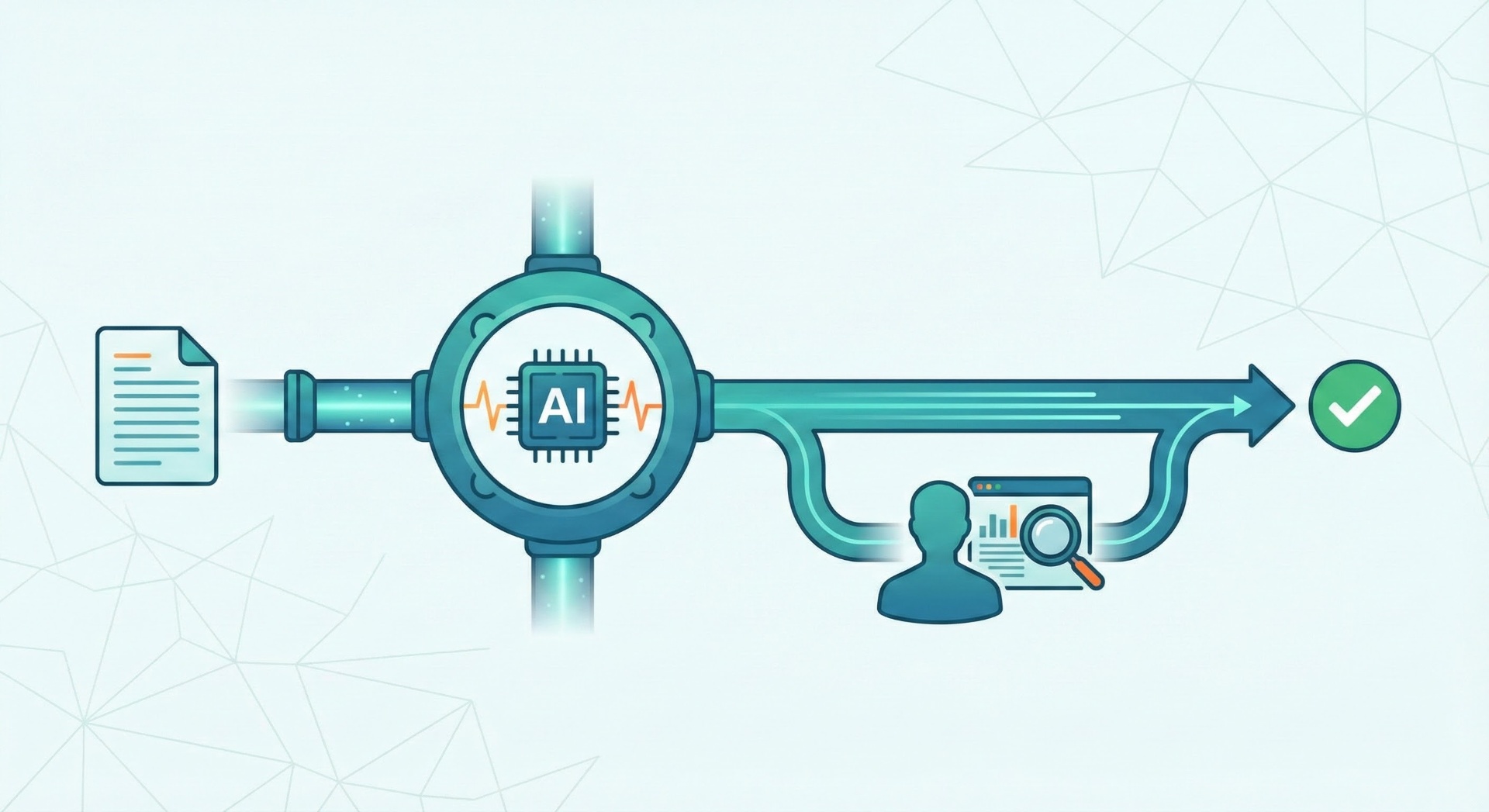
The goal is not to let an LLM "decide" what your numbers are. The goal is to use AI as a high-leverage analyst that tees up the data for final review.
Operating model: Controls matter more than prompts
The firms getting real leverage from AI extraction share a "safety-first" architecture:
1. Schema First, Not Model First
They define exactly which fields they care about (e.g., "Gross Retention," "Cash Runway") and how those map to their data model before deploying AI.
2. The "Audit Trail" is King
Every extracted data point must maintain a clickable link back to the exact page and pixel location in the source PDF. If you can't trace the number to the document, you can't trust it.
3. Confidence Scoring & Routing
Fields below a certain confidence threshold are automatically routed to human review. The system knows what it doesn't know.
4. Data Isolation
Your portfolio data is your edge. A secure pipeline ensures data is processed in an isolated environment, never used to train public models.
The business impact
When AI-backed extraction is tied to a solid data model, the shift is tangible:
- Quarterly reporting shrinks from weeks of "chasing and keying" to days of "reviewing and publishing."
- Investment Committees trust the system of record because they can click through to the source document.
- Audit Readiness becomes the default state. When an auditor asks for the source of a valuation input, you have the evidence instantly.
Stop treating data collection as the cost of doing business. Treat your document corpus as an asset waiting to be unlocked.
Ready to see what an AI-first extraction pipeline looks like in practice? Book a demo and we will walk you through real document flows end to end.