You're sitting on a portfolio of 50 companies.
Every month you get emails with cap table updates, financial statements, board packages, KPI reports. You're exporting CSVs from data rooms. You're copying numbers into spreadsheets. You're praying nobody changes a format mid-year.
And you're thinking: "I could just build a script for this. How hard can it be?"
Here's what nobody tells you: it's not hard to start. It's impossibly expensive to maintain.
The Token Math
Start with the raw API costs. A data extraction pipeline that actually works - not a weekend hack, but something you'd trust with real portfolio data - costs $15-25 per thousand documents to run through LLMs. A 50-company portfolio generates roughly 400 documents per company per year. That's 20,000 documents. At $20 per thousand, you're at $400/month just in API calls.
But tokens are the rounding error. The real costs are everything around them.
What You Actually Have to Build
You can't just throw documents at Claude and hope for the best. That gets you maybe 60-70% accuracy on a good day. For portfolio data - where a misread preference stack or a wrong ownership percentage can cascade into real financial consequences - you need something much more robust.
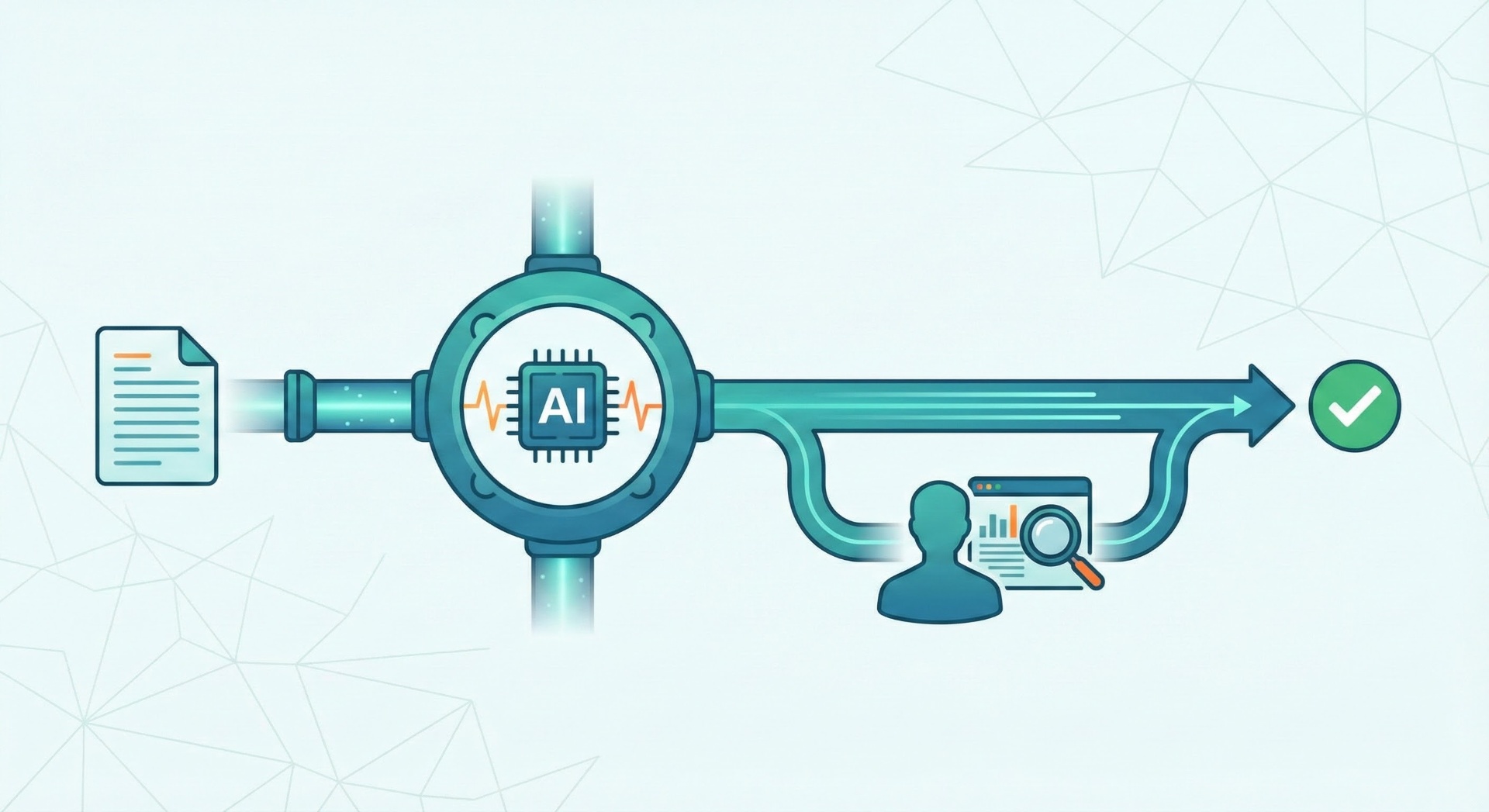
Multi-LLM consensus. Each extraction agent runs across multiple models, compares answers, and escalates disagreements to an AI review council. Building this architecture from scratch takes a senior engineer 4-6 weeks. That's $25K-30K in salary before you even touch infrastructure costs.
A real data model. We've built 171 specialized extraction agents across 16+ document types - cap tables, financial statements, board packages, investor rights agreements, SAFEs, warrants, convertible notes, SPA addendums. Each agent is purpose-built for a specific field. Building that taxonomy, testing it against real-world variance, and maintaining it as formats evolve is ongoing work. Count on 2-3 engineers for the first quarter, then 0.5 FTE indefinitely.
Provenance tracking. Every number needs to trace back to the source document, extraction timestamp, and document version. This isn't optional if you care about auditability. It's also surprisingly hard to get right.
Self-healing pipelines. Documents change. Excel templates get reformatted. New cap table platforms emerge. When extraction breaks - and it will - you need pipelines that detect failure, escalate, learn from the fix, and handle it next time.
Integration connectors. Email inboxes. Dropbox. Google Drive. Box. SharePoint. Each is a connector you build and maintain. That's 1-2 weeks per connector.
Human-in-the-loop QC. You need humans to validate extractions, especially early on. Budget 0.5-1 FTE.
Security and compliance. SOC 2, encryption, audit logs, access controls. Not a one-time build. Ongoing.
The Maintenance Trap
Here's where every in-house build fails: they don't account for maintenance.
Your extraction pipeline works great for three months. Then someone sends a cap table from a new platform you've never seen. Your script breaks. You spend a week debugging. This happens every 4-6 weeks with a 50+ company portfolio.
45% of vibe-coded software contains security vulnerabilities, according to CodeRabbit's analysis. If you're handling LP financial data, investor documents, and cap table information, that's not a theoretical risk.
Every year you'll spend 4-8 weeks on maintenance and edge cases. For a senior engineer at $150K/year, that's $12K-24K annually. Every year. Forever. And it only gets worse as you grow.
The Real Math
Add it all up: $50K-100K per year in engineering time. To maintain something that solves one problem. Versus $2,400/year for GoodStream.
And we're not a walled garden. You own your data. Export it wherever you want - Carta, Pulley, your own spreadsheets, your own database. We're the extraction and intelligence layer that fits into whatever you're already using.
The Question Isn't "Can I Build This?"
Of course you can. If you're technical, you can build a prototype in a weekend.
The question is whether you want to spend the next two years maintaining it. Whether you want to be the one debugging extraction failures at 11 PM before a board meeting. Whether you want to rebuild your pipeline every time a document format changes.
For a solo angel with five companies, maybe it makes sense to hack something together. For anyone running a fund - or anyone who values their time - it doesn't.
$199/month. Connect your document sources. Come back in three days and your portfolio is structured, validated, and audit-ready. No engineers required. No maintenance. No security vulnerabilities to lose sleep over.
That's the math. The rest is ego.
Ready to stop building and start extracting? Book a demo and we'll show you what $199/month gets you.