Opaque markets are not fair markets.
Public equities spent 50 years proving this. The transparency curve of the last half-century is one of the most consequential arcs in financial history, and it is worth taking seriously before writing off what is happening now in private capital.
What 50 Years of Public-Market Transparency Taught Us
Electronic trading replaced floor specialists. EDGAR made SEC filings searchable by any analyst anywhere. Index funds forced fees toward zero and aligned costs with value delivered. Market data went from delayed-and-expensive to real-time-and-cheap. Each one of these waves looked, at the time, like a threat to the people extracting rent from the old opacity. Each one, in hindsight, expanded the total addressable pool of capital. More participants showed up precisely because the information cost of showing up dropped.
Every wave of transparency grew the market. Not shrunk it.
Private markets skipped that entire evolution. A $13 trillion asset class still runs on PDFs, manually keyed spreadsheets, and quarterly updates that arrive 45 days late. LP reports are written once a quarter, based on data that was already a month old when the analyst started typing. Cap tables live in whatever system the last founder preferred. Side letters arrive as scanned documents. Banking data lives in 15 different portals with 15 different exports. The only thing consistent is how inconsistent everything is.
The industry has been telling itself that this opacity is just the nature of the asset class. Too much complexity. Too much unstructured data. Too many non-standard structures. For a long time, those excuses held up because the tools to cut through them did not exist.
They exist now.
Opacity Is a Tax, and It Compounds
The opacity in private capital is not a feature. It is a tax. And like all taxes, it compounds. LPs pay it in the form of slower allocation decisions and worse transparency into where their capital actually sits. GPs pay it in the form of operational overhead and fundraising friction when they cannot produce real-time answers. Founders pay it in the form of reporting burden that pulls them away from building. Fund admins pay it in the form of headcount dedicated to janitorial work on other people's spreadsheets. The entire industry is bleeding margin into a problem that no longer has to exist.
What changes the equation is AI-native extraction. Specifically, three capabilities together, which is why so many single-point tools have missed the mark.
Extraction models that read and actually understand unstructured legal and financial documents at scale. A board deck, a stock purchase agreement, a cap table export, and a one-paragraph founder email go through the same pipeline and come out as structured data.
Validation layers that catch the errors humans miss on the 100th page of a document. A deterministic review harness that flags accuracy scores below threshold before anything touches the system of record.
Query interfaces that let a GP or a CFO ask "which portfolio companies have non-standard liquidation preferences" or "what is the realized vs unrealized TVPI by vintage" and get an answer in seconds rather than in a two-week analyst project.
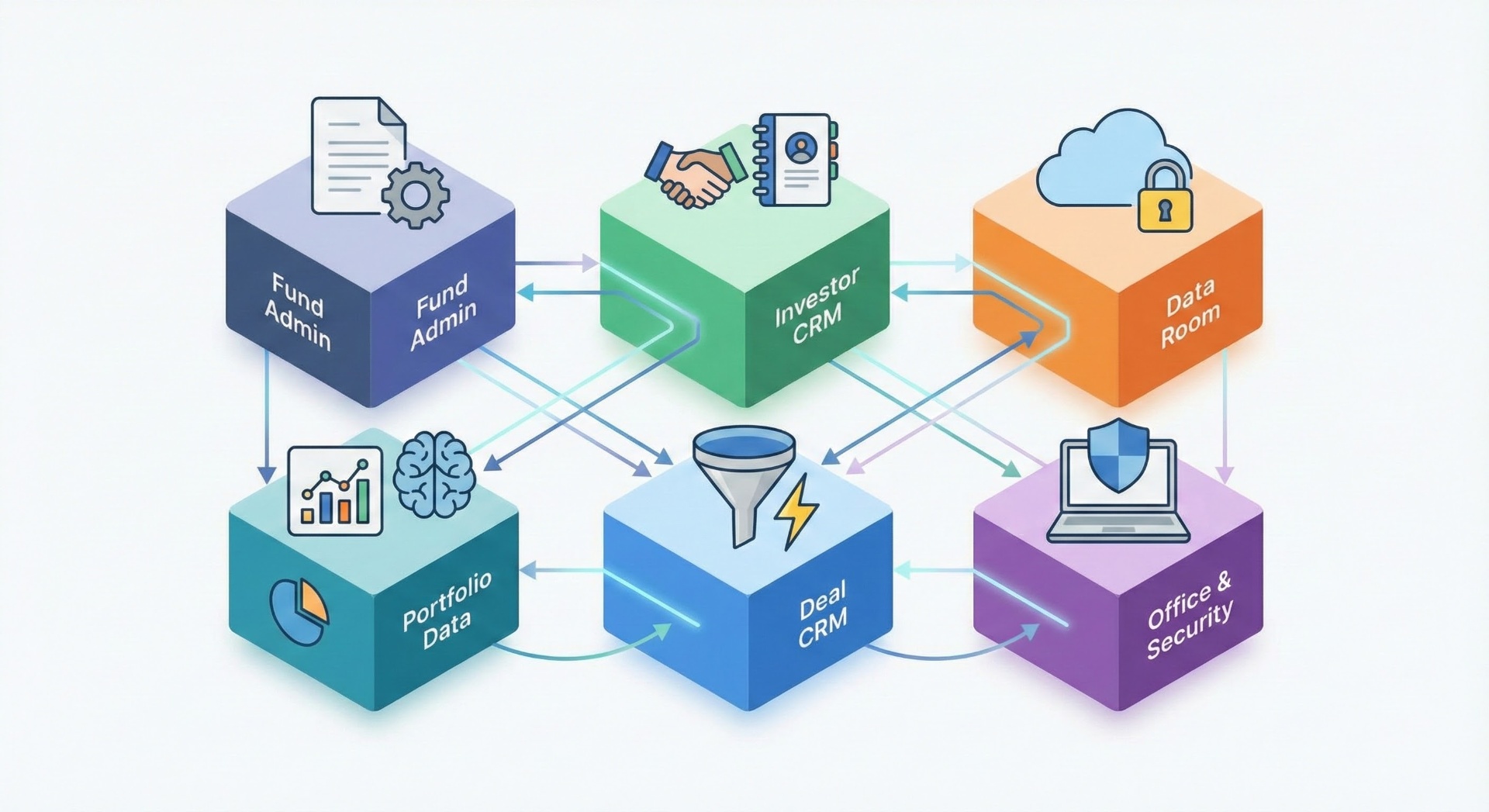
Together, they collapse the information asymmetry that private markets have treated as permanent. Not partially. Not in one narrow workflow. Across the full motion of a fund, from deal ingestion to LP reporting to secondaries pricing.
The Transparency Dividend Compounds Quarterly
The firms that move first on this are not just getting better data. They are getting better pricing on secondaries because they can underwrite faster and more accurately. They are getting faster LP reporting that builds trust and shortens the next fundraise. They are getting earlier pattern recognition on portfolio risk, because issues surface in the data before they blow up in a board meeting. The transparency dividend is not a one-time gain. It is an operating advantage that widens every quarter it compounds.
The firms that wait are making a different bet. They are betting that LPs will keep tolerating quarterly letters that arrive six weeks late. That founders will keep accepting reporting burden as the cost of taking capital. That the operational overhead of opacity is somehow still cheaper than the investment required to eliminate it. Every one of those bets is aging badly.
Public markets proved the pattern. Transparency does not destroy value. It redistributes rent away from the intermediaries whose entire business model depended on information asymmetry, and it expands the pool of people willing to put capital to work. Private markets are about to run that same play on a 36-month timeline instead of 50 years, because the technology has finally caught up to the ambition.
The question is not whether private markets become more transparent. That decision has been made by the technology curve, and it is irreversible. The question is whether your firm is on the side benefiting from the dividend or on the side paying the tax.
Real-time intelligence for private capital is not a future state. It is a present capability. The firms that understand which side of that line they want to be on are already moving.
Ready to put your portfolio data on the transparent side of the line? Book a demo.