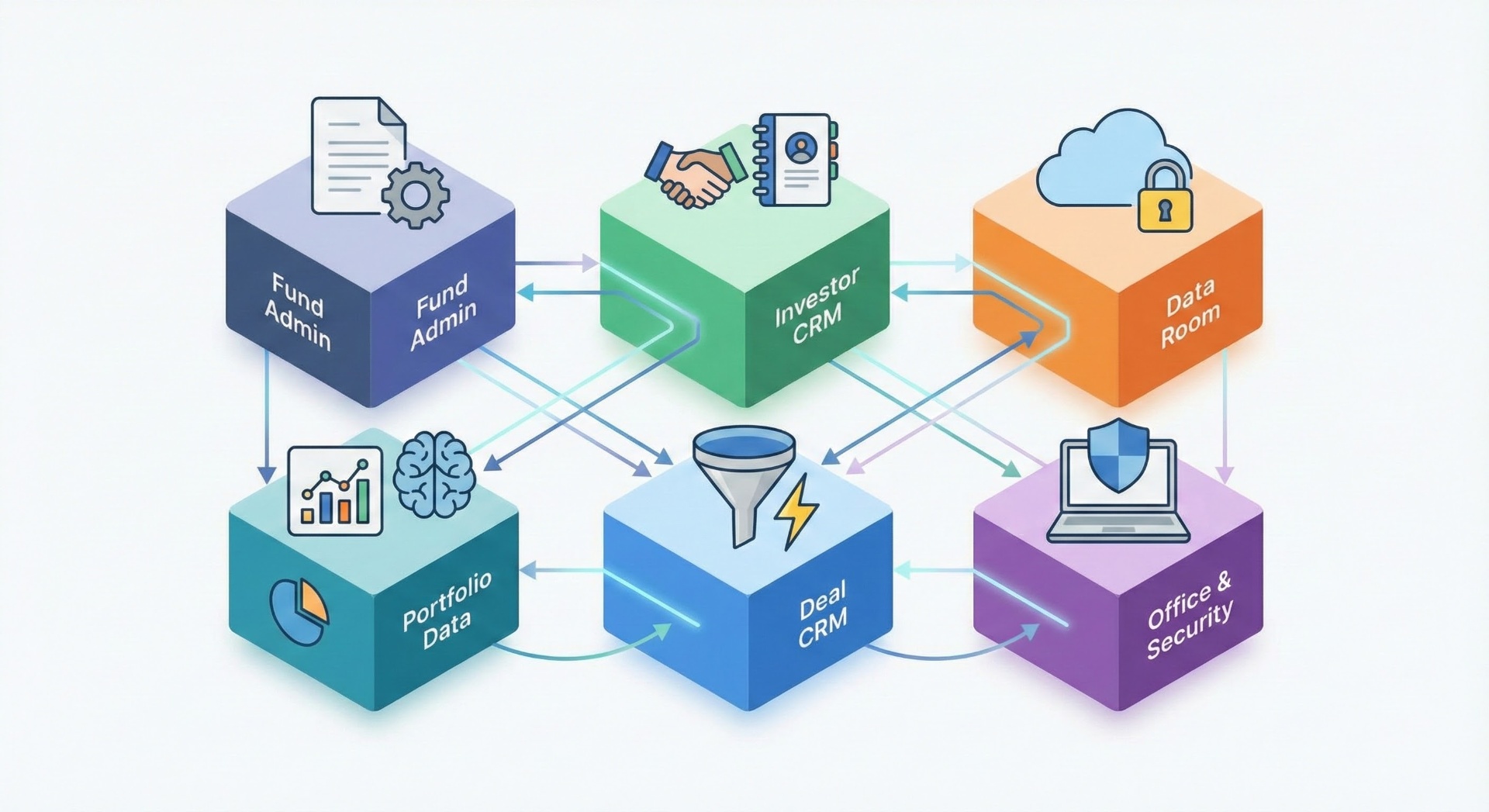
Fund operations is no longer a back-office afterthought
In many private markets firms, the operations team quietly became one of the most critical parts of the franchise.
They sit at the intersection of:
- Portfolio data and valuations
- LP reporting and fundraising
- Compliance and risk management
- Internal systems and workflows
As funds adopt more technology and AI, the value of a strong ops team increases, not decreases. The work changes from manual reconciliation to designing and running the systems that make the firm work.
Core skills for the new fund ops profile
The strongest fund operations professionals in 2025 tend to combine four skill sets.
1. Data literacy
They do not need to be quants, but they must be able to:
- Read and question financial and KPI data.
- Understand basic data modeling and how fields relate across systems.
- Spot anomalies that indicate a data or business issue.
2. Process design
Every private markets firm has legacy workflows that grew organically. Modern ops leaders:
- Map processes for data collection, valuations, reporting, and capital activity.
- Identify bottlenecks, failure points, and unnecessary variation.
- Redesign flows so they can be automated and controlled.
3. Technology fluency
This is not about loving new tools for their own sake. It is about:
- Knowing what your core systems can do and where they fall short.
- Being comfortable working with vendors, APIs, and automation platforms.
- Understanding where AI is credible today - and where it needs guardrails.
4. Communication and influence
Ops teams succeed when they can:
- Translate technical and process detail into simple narratives for investment teams and leadership.
- Explain tradeoffs between control, speed, and effort.
- Hold the line on data discipline without being perceived as blockers.
It is a fundamentally cross-functional role.
How leading funds are restructuring ops
There is no single template, but a few patterns are emerging.
Pattern 1: Clear ownership of the data layer
Instead of "everyone owns a piece of the spreadsheet," leading funds define a clear owner for the portfolio data layer - often a Head of Operations or Head of Portfolio Data.
Responsibilities typically include:
- Data model and definitions.
- Document and data ingestion workflows.
- Quality control and exception handling.
- Integration between systems.
Pattern 2: Hybrid ops–analytics roles
Some funds are hiring or retraining operations professionals into hybrid roles that combine:
- Data analysis on portfolio and fund-level metrics.
- Ownership of dashboards and reporting logic.
- Partnership with investment and IR teams to turn data into narratives.
These are often the people who can answer "what is actually happening in our portfolio" without needing two weeks of preparation.
Pattern 3: Dedicated owners for automation and AI
As automation and AI become more embedded in workflows, funds are starting to assign explicit ownership:
- Which processes are automated and how.
- Which AI models and prompts are used where.
- How exceptions are handled and how the system is monitored.
Without clear ownership, AI initiatives tend to remain on the edge of the organization or get stuck in pilots.
What changes when you get this right
When you build a modern fund ops function around these principles:
- Quarterly cycles become more predictable and less painful.
- LP and regulatory interactions are less reactive.
- Investment teams trust the numbers they see and spend more time on actual investing.
- Leadership can see, in real time, how the fund is performing and where risk is building.
In other words, fund operations shifts from "necessary cost center" to "internal engine that makes everything else work better."
Practical steps for the next 12 months
If you are looking at your current ops setup and thinking "we are not there yet," consider this sequence:
- Define a single owner for the portfolio data layer and fund operations workflows.
- Map the top 3 workflows that are causing pain - usually data collection, valuations, and LP reporting.
- Invest in upskilling your existing team on data and technology; many ops professionals are eager to grow into these roles.
- Introduce AI and automation only where the process and data model are stable, not as a band-aid for broken workflows.
You do not need a 50-person operations group to operate like a modern firm. You do need clarity, ownership, and a willingness to treat fund ops as a strategic function.
If you want to see how GoodStream supports modern fund operations, see our platform or book a demo.